
ICON®
Portable noninvasive cardiometer Window to the Circulation®

The ICON® is a portable, noninvasive cardiometer for the continuous measurement of different hemodynamic parameters in neonates, children or adults. The ICON® has a high-resolution 3.5 “screen and is used as a stand-alone device.
The ICON® is the world’s first and only hand-held und thus portable, battery-operated cardiometer specifically validated and approved for premature and neonatal use. The size and weight of the ICON® are ideal for mobile use or for situations with limited space. In addition to routine spot checks during clinical rounds, continuous measurement of a patient for at least two hours is possible in battery mode.
ICON® Parameters
A comprehensive assessment of the hemodynamic status is provided by the various parameters available.
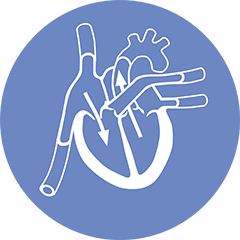
Blood Flow:
SV, SI, CO, CI, HR

Fluid Status:
TFC, FTc, SVV
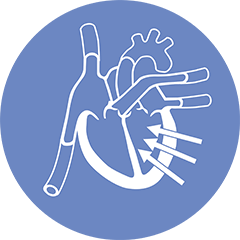
Contractility & Cardiac Function:
ICON, VIC, STR, CPI, PEP, LVET
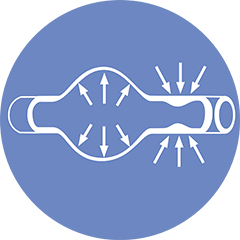
Vascular Resistance:
SVR, SVRI
(after specification of SBP, DBP & CVP)
Blood Pressure:
MAP
(when SBP & DBP specified)
Oxygenation:
DO2, DO2I
(after specification of Hb and SpO2)
Medical Perspective
I began my intellectual adventure with Osypka Medical, Inc. in 2008, when my Chair of Anesthesiology at the University of California San Diego (UCSD) told me that he had seen some interesting new equipment for the non-invasive measurement of cardiac output at a recent meeting and suggested that I take a look at it– especially since the head of the company and the inventor of the technology lived and worked in nearby La Jolla. Before coming to UCSD in 2008, I had done some work with cardiac output in pregnant patients, and in my new role as the Director of Obstetric Anesthesia I was eager to focus on the hemodynamics of pregnancy– particularly if we could use a new impedance cardiography technology that was completely non-invasive and easy to use. I promptly met Dr. Osypka at his office and very soon one of his representatives was delivering Aesculon and ICON devices for us to try out in Labor & Delivery.
I loved Markus’ two devices from the start, and over the next 7 years, my medical students, residents, fellows and I were continually delighted with the insights we were obtaining from using devices to trend maternal cardiac output in a continuous and hands-free way which interfered very little or not at all with patient care in the emotionally charged and sometimes crowded Labor & Delivery environment.
The ability to routinely and inconspicuously trend maternal cardiac output was something we had only imagined before, but now—with Electrical Cardiometry as embodied in the ICON device– we were able to follow the cardiovascular effects of medications, anesthesia and maternal position in real time and on a routine basis. This experience of “easy” and “routine” cardiac output trending revolutionized my thinking about the hemodynamics of pregnancy and hemodynamics in general, and was the basis for many publications and presentations.
Another result of our work with Osypka Medical devices at UCSD was that we developed a relatively new approach to improving fetal, placental and myometrial oxygenation both during labor and during the entire second half of pregnancy, and we theorized that this approach might improve overall pregnancy outcomes for both the mother and the fetus. I describe this approach in detail in my 2024 book entitled “Threats to fetal, placental and myometrial oxygenation: a unified hemodynamic approach,” and the insights and ideas I present in this book would not have been obtained without the use of the highly portable and “low footprint” ICON device.
Working with Dr. Osypka and his medical equipment has been the most satisfying intellectual experience of my career in medicine, and I hope that others will continue to evaluate the potentially important theories and possible treatments we developed at UCSD using the ICON device.

Thomas L. Archer, MD, MBA
Former Clinical Professor of Anesthesiology
Former Director of Obstetric Anesthesia
University of California San Diego School of Medicine
Visit Dr. Archer’s website on pregnancy hemodynamics.